Merry Christmas!

I put my tree up today and decorated the rest of the house – it always takes so much longer than I think but its all done now and smelling beautiful with some cinnamon and orange candles. We’ve some friends coming round in the lead up and children (in their 30’s and 40’s!) and grandchildren coming home early before going on to their partners’ families.  It will be The Husband and I and The Husband’s brother and girlfriend for the actual day – ducks and Christmas pudding and trifle!

I make a lot of my Christmas presents and always hope that the recipients will realise that in the time of making I was thinking of them so this week I thought I would give you a few ideas of edible gifts so you, too, can enjoy the giving!

My Best Friend Sandra’s Tablet (Scottish Fudge)

  • 150ml evaporated milk
  • 150ml water
  • 75g butter
  • 450g granulated sugar
  • 1/4 teaspoon vanilla essence

Put the milk, water, butter and sugar into a heavy saucepan and heat through slowly until the sugar has dissolved. Then, boil steadily for 10- 15 minutes, stirring constantly so that the tablet doesn’t stick. After 10 minutes or so, test by dropping a little into a cold glass of water.  If it forms a tiny blob, remove from the heat,  Add the vanilla and cool slightly – then get rid of any angst by beating it hard until it starts to crystalise and thicken.  Pour into a buttered dish and cut into squares when set.

Raspberry, gin and tonic Syrup

  • 800g frozen raspberries
  • 150g icing sugar
  • Juice 1½ lemons
  • 500ml tonic water
  • 10 juniper berries, lightly crushed
  • 6-7 tbsp gin

Put the raspberries, icing sugar and lemon juice in a medium saucepan over a low-medium heat and cook until the raspberries have broken down and are well combined. Push the raspberry mixture through a sieve into a bowl using the back of a spoon. Rinse out the pan to get rid of any remaining seeds, then pour the purée back into the pan with the tonic water and juniper berries (discard the seeds). Reduce the purée for 15-20 minutes over a medium-high heat, stirring now and then, until syrupy. Add the gin and stir to combine. Leave to cool before packaging into sterilised jars or bottle

Lemon and Cranberry Shortbread

  • 200 g unsalted butter, chilled and cubed
  • 125 g icing sugar
  • 300 g plain flour
  • 2 tsp. vanilla extract
  • 50 g dried cranberries, finely chopped
  • finely grated zest of 1 lemon
  • To finish (optional) 150 g white chocolate, chopped edible sprinkles

Line a 20.5cm square tin with baking parchment and set aside. Rub the butter, sugar, flour and a pinch of salt until the mixture just clumps together. Add the vanilla, cranberries and lemon zest. Press mixture into the prepared tin and level (using your hands or the back of a metal  spoon is easiest). Prick dough well with a fork, then chill for 30min. Preheat oven to 170°C (150°C fan) mark 3. Bake the shortbread for 45-50min or until  nicely golden. While it’s still warm, cut the shortbread in half across the middle. Then cut each half into  fingers 1.5cm (2/3in) wide. Cool completely in tin.  If finishing the biscuits with chocolate, line a baking sheet with baking parchment. Melt the  chocolate in a heatproof bowl set over a pan of barely simmering water. Using a pastry  brush, paint chocolate on one end of each shortbread finger, then arrange on prepared  baking sheet. Decorate with sprinkles and leave to set, or chill for 15min.

Lots of love, Ailsa xx
Following on . . .

As the previous blog about slow cooking appears to have been a hit, this is a little bit of a follow on in that you can cook all of these and freeze the remainder for another day (or invite some friends over!)

We live in the country where, like it or not, there is a lot of shooting this time of the year.  If given any game birds, remember to respect them as a free range, organic piece of meat who has at least flown and been part of the countryside for most of its life. Cook them to the best of your ability and use all of it.

Pheasant Casserole with Apples

  • 25g butter
  • 2 tablespoon sunflower oil
  • Salt and pepper
  • 6 pheasant breasts, skinned (use the carcass to make stock with some carrots and onions and water)
  • 2 onions, thinly sliced
  • 150ml apple juice (cloudy is best)
  • 300 ml game stock – see above but you can also use a cube
  • 2 dessert apples, peeled and cut into wedges
  • 2 tablespoon double cream
  • 1 tablespoon lemon juice

Heat half the butter and all the oil in a non-stick frying pan until very hot.  Season the pheasant breasts and fry them in the hot pan until golden.  Set aside. Heat the remaining butter in the unwashed pan and fry the onions until tender – about 10 minutes. Sprinkle in the flour and gradually blend in the apple juice and stock. Bring to the boil stirring and add apples and breasts.  Cover and simmer over a low heat for about 12 minutes until the pheasant is just cooked through. DO NOT OVER COOK! Stir in the double cream and lemon juice and serve with mashed or baked potatoes and a green vegetable.

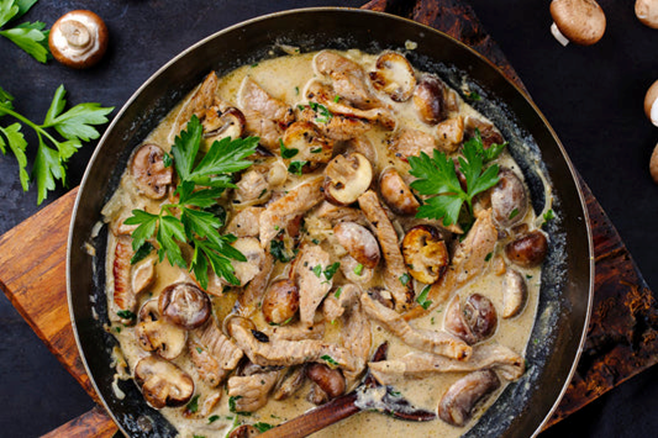
Pheasant Stroganoff – a quick and delicious way of using pheasant breasts.

  • 4 pheasant breasts, sliced
  • 1 shallot, finely chopped
  • 2 grated cloves of garlic
  • 6 – 8 chopped mushrooms
  • 200ml double cream
  • 2 teaspoons paprika
  • 4 cornichons, finely chopped
  • 1 tablespoon capers, finely chopped
  • 1 teaspoon grained mustard
  • Juice of 1 lemon
  • Salt and pepper
  • Handful of parsley, finely chopped
  • Pasta or rice to serve

Fry the pheasant strips on a high heat until they have a good colour. Put aside. Gently fry the shallot and garlic until soft, add mushrooms, then the cream, mustard and paprika and put the pheasant strips back in. Turn up the heat until they are simmering and the pheasant almost cooked through (you want it to be little pink or it will taste dry).  Add the cornichons, capers and lemon juice, seasoning and parsley.

Partridge with cider and cabbage

  • 1 tablespoon rapeseed oil
  • 4 streaky bacon rashers,      roughly chopped
  • 2 dressed partridges (you can try other game, too – even poussins)
  • 1 onion, finely chopped
  • 1 leek, sliced
  • 2 crushed garlic cloves
  • 2 tablespoons finely chopped thyme leaves
  • 300 ml medium dry cider
  • 2 tablespoon double cream or crème fraiche
  • ¼ savoy cabbage, finely shredded

Heat the oven to 180oC/gas4.  Heat the oil in an ovenproof pan and fry the bacon and birds for 4 – 5 minutes, turning until brown on all sides. Take out and add the onion, leek and garlic to the pan and cook, stirring, over a medium heat for 3 -4 minutes until starting to soften.  Return the partridges and bacon to the pan. Add the thyme and cider and put into the oven, cooking, uncovered for 20 – 25 minutes.  Take out of the oven and transfer the birds to warmed plates.  Stir into the pan the cream and cabbage and put over a medium heat to warm through – don’t let it boil! Season and serve with the partridges. ¼ savoy cabbage, finely shredded.

Sloooow Cooking

When I started this blog, I didn’t want us to do any batch cooking – I wanted everyone on their own to enjoy the shopping, the cooking and the eating of a meal but I have been asked recently to think about cooking in a slow cooker – so here you are!

Why slow cook?  Basically, once you have prepared all the ingredients and put them in the pot, the food can be left to its own devices, requiring minimal further effort , so you can go out for the day, spend time in the garden, paint a room – and return to a perfectly cooked meal.

Slow cooking makes economic sense, too, as it works best using cheaper cuts of meat and inexpensive staples such as beans and lentils.  It is also easy to cook larger quantities at once, creating leftovers for another day or to freeze.

With colder times approaching, stews, casseroles and pot roasts are real comfort food – and you might not have thought of doing them just for yourself so this way you can be really organised for a meal for today  and think ahead to another week.

Energywise, slow cooking is greatdon’t be put off when you see the recipe saying switch on and slow cook for 8 hours!

  • Cooking time: 8 hours
  • Energy used: 200 watts x 8 hours = 1600 Wh or 1.6 kWh 
  • Cost: If your energy rate is 20p per kWh, the cost would be 1.6 kWh x 20p = 32p. 

Tips for success

For maximum flavour, brown the meat at the start of the cooking ie lightly fry and soften aromatic vegetables such as onions and garlic in the same  pan afterwards.

Be careful not to over season as salty flavours become concentrated with slow cooking.  You ca always adjust at the end.

Peppercorns and seeds, such as cumin and coriander are best crushed before adding to the pot so they release their flavour slowly.

Woody herbs such as rosemary and thyme are robust enough to add at the beginning of cooking whilst delicate herbs like parsley towards the end.

Always add delicate ingredients that don’t need much cooking such as fish and seafood towards the end of the cooking time.

If topping up the liquid during the cooking, add HOT liquid to prevent lowering the cooking temperature.

Make sure all frozen ingredients are thawed and meats thoroughly defrosted before cooking.

If a recipe calls for milk add this for the last 30 minutes of cooking. Add any cream at the end.

Adapting recipes from conventional  cooking to a slow cooking. Look at the basic cooking time – but leave to cook for longer – low, if all day and high, for 3 – 4 hours.  A slow cooker will never boil dry. As a general rule, halve the liquid as it doesn’t evaporate. If at the end, it looks like too much liquid, put it onto high with the lid off.   You may need to reduce spices and herbs as their flavour becomes concentrated in the slow cooker.

MINESTRONE SOUP                                                                                   Serves 4 – 6

  • 2 tablespoon olive oil                                                  
  • 2 celery sticks, chopped
  • 2 carrots, chopped                                                       
  • 1 onion, chopped
  • 400g can chopped tomatoes                                   
  • can of cannellini beans (optional)
  • 750 ml hot chicken or vegetable stock                
  • 60g small pasta shapes
  • 4 tablespoons chopped parsley                             
  • 40g parmesan cheese

Heat the oil and cook the celery, carrots and onions until softened,  Stir in the tomatoes and their juice.  Transfer to the cooker and add stock. Cover and cook low 6 – 8 hours. Add the pasta (and beans, if using) for the last 15 minutes of cooking.  Stir in the parsley and parmesan.

MUSTARD CHICKEN CASSEROLE                                                       Serves 4 – 6

  • 2 tablespoons wholegrain mustard                      
  • 1 tablespoon English mustard
  • 2 tablespoons runny honey                                      
  • 8 chicken thighs (bone in, skin off)
  • 2 tablespoons olive oil                                                
  • 2 -3 onions roughly chopped
  • 2 – 3 cloves of garlic
  • 200g parsnips/200g carrots, peeled and chopped
  • 1 pint hot chicken or vegetable stock ( a cube is fine)
  • Herbs of your choosing / slices of lemon (optional)

Mix together the mustards and honey in a bowl. Season the thighs and smother them with the mustard mix.  Leave to marinate for ½ hour. Heat half the oil in a pan and add the chicken pieces, a few at a time. Cook for 6 – 10 minutes until golden.  Remove and set aside. Add the remaining oil and fry the onions for a few minutes, scraping up any of the chicken juices,  Add the carrots and parsnips. Put everything into the cooker, pour in the stock and add the chicken. Put the lid on and cook on low for 6 hours or High for 3 – 4 hours.

RED CABBAGE WITH CIDER                                                                   Serves 4

  • ½ red onion                                                                      
  • 1 large red cabbage
  • 1 apple, cored but not peeled, finely chopped
  • 1 teaspoon 5 spice powder  
  • 300ml cider    

Put the onion, cabbage, apple and 5spice powder into the cooker. Season. Pour in the cider and stir to mix well.  Cook on low for 8 hours or high for 4 hours.

Super Soups

October, and a sharp drop in temperature so we really need something warm and sustaining – and what could be better than soup?  I know it’s easy to open a tin, a packet or a carton, and, yes, some of them are very nice – but wouldn’t you like to make your own with fresh ingredients and no preservatives? Buy “wonky” veg / use it up the odd ingredient lurking in the back of the fridge or use up the end of spices or herbs

Of course, you can’t really make soup for one but this is one of those occasions when you do want to make more than you need for one sitting – a pot of soup sitting in the fridge when you want it should last the week – and you can vary it in lots of ways by what you add to it.

Extra touches you can add to Soups

Parsley    Sage         Rosemary        Thyme           Oregano            Basil         Coriander      Mint         

Kaffir Lime Leaves              Chervil              Chives

  • Single or Double Cream
  • Crème Fraiche
  • Yogurt
  • Sour Cream

Croutons – cube some bread and fry in butter

Croutes – French bread of slices of bread, brushed with olive oil and toasted in the oven

As above but rubbed with garlic

As above but covered in cheese and toasted

You can make your own stock, boiling up the carcass or bones of a roast dinner with some vegetables – but stock cubes are perfectly acceptable – there lots of good ones in the shops now.

Canned Beans eg cannellini / pulses eg dried beans and lentils / grains eg rice, pearl barley and couscous can all be added to bulk out simple soups.

How about you make one of the below, go for a walk in the lovely crisp air and come home to a bowl of soup.  Don’t forget to pick up a nice crusty bread to go with it – and you definitely want some nice butter to go on it – no margarine!

Broccoli and Stilton Soup – a “quickie” recipe as cooking time is less than 10 mins   Serves 4

  • 12oz broccoli, cut into small pieces
  • 14fl oz vegetable stock
  • 1 oz butter
  • 4 spring onions, sliced (or 1 leek)
  • 1 3/4oz Stilton, crumbled or to taste
  • 3 ½ fl.oz double cream
  • Salt and pepper
  • Pinch nutmeg

Put broccoli pieces into a glass bowl. Pour over stock. Cover the bowl with cling film and put in microwave. Cook for 4 minutes till tender. Heat a frying pan till hot and add butter. When it starts to foam, add onions and cook for 1 minute. Put cooked broccoli and stock in a bowl/blender. Add onions, stilton and cream and blend together. Transfer mixture to a pan and bring gently to a simmer.

Red Lentil and chilli soup Serves 4

  • 2 teaspoons cumin seed
  • pinch chilli flakes
  • 1 tablespoon olive oil
  • 1chopped red onion
  • 140g red lentils
  • 850ml vegetable stock
  • 400g can tomatoes
  • 200g can chickpeas*
  • Small bunch of coriander chopped
  • Greek yogurt to serve

* optional

Heat a large saucepan and dry fry cumin seeds and chilli flakes for 1 minute. Add oil and onion and cook for 5 minutes. Stir in the lentils, stock and tomatoes and bring to boil. Simmer for 15 minutes. Whiz the soup with stick blender or food processor until rough puree. Put back in pan and add chickpeas if wanted. Heat and stir in coriander. Serve with a dollop of yogurt.

Leek and Potato Soup with cheesy mustard croutons Serves 4

  • 10 grams butter
  • 2 leeks
  • 1 teasp dried tarragon (optional)
  • 1 large potato
  • 500 ml stock with boiling water and a stock cube
  • 30 grams watercress (optional)

Melt butter in a large pan and add chopped leeks and tarragon. Add the chopped potato and stock.  Bring to boil and cook until potato is soft.  Add the watercress if using, simmer for 3 minutes and blend till smooth. Preheat grill to high and toast 2 slices of bread/baguette until crisp.  Spread each slice with some Dijon mustard and top with some grated cheese (any kind you like) Put the soup into a bowl and top with a cheesy crouton and serve.

Carrot and Ginger Soup Serves 4

  • 1 tbsp oil
  • 1 large onion, sliced
  • 2 tbsp coarsely grated ginger
  • 2 garlic cloves, sliced
  • 500 grams of carrots
  • 850ml vegetable stock
  • little nutmeg

Heat the oil in a large pan, add the onion, ginger and garlic, and fry for 5 mins until starting to soften. Stir in the nutmeg and cook for 1 min more. Pour in the stock, add the carrots then cover and simmer for 20-25 mins until the carrots are tender. Scoop a third of the mixture into a bowl and blitz the remainder with a hand blender or in a food processor until smooth. Return everything to the pan and heat until bubbling. Serve topped with a little nutmeg.

You say tomato; I say tomahto

In the middle of a tomato glut! Why do tomatoes all become ripe at the same time? And, also, what about the ones which never turn red?  All the hard work of growing, looking after and nurturing them to end up with almost too many of the little red bombs!  Sun-warmed tomatoes picked straight from the vine are arguably the ideal way to enjoy tomatoes. What can you do with them once you’ve made gallons of soup and tomato sauce for the freezer, eaten them fresh, fried and baked and given away pounds?

Beefsteak tomatoes are best for these 3 recipes

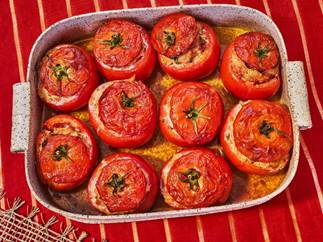
Stuffed Tomatoes (1) Fish

  • 170g cooked leftover salmon fillet, flaked
  • 1 tbsp shredded smoked salmon
  • 1/2 tbsp ready-made mayonnaise
  • 1 garlic clove, crushed
  • 1/2 tbsp tomato ketchup
  • splash balsamic vinegar
  • 2 large firm tomatoes, cut in half from top to bottom, seeds removed and reserved
  • salt and freshly ground black pepper

Cut the tops off the tomatoes and scoop out the inside.  Lay cut side down on some kitchen paper. In a large bowl, mix together the flaked salmon, smoked salmon, mayonnaise, garlic, ketchup, scooped out tomato flesh and balsamic vinegar until well combined. Season, to taste, with salt and freshly ground black pepper and pile back into the tomato shells, using the tops as lids.

Stuffed Tomatoes (2) veggie

Cut off the tops, scoop out the insides as above. Bake in the oven for about 10 – 15 minute at 190 – 200oC.  Now add any chopped up (small) vegetables; left over rice, quinoa or couscous, herbs (parsley, mint or basil), garlic (of course).  Put all the ingredients you want in a bowl with the scooped-out flesh, mix well and put back into the shells.  You can put the lids back on or top them with breadcrumbs and or cheese.

Stuffed tomatoes (3) – meat

  • 2 – 3 tomatoes
  • 1 shallot, finely chopped125grams lamb mince
  • 15 grams fresh breadcrumbs
  • 150 grams button mushrooms, finely chopped
  • 1 tablespoon chopped fresh tarragon
  • salt and pepper
  • Sauce: 4 medium tomatoes, cut into quarters    25ml rapeseed oil    1 garlic clove chopped

Preheat the oven to 200oC/Gas6. Slice the tops off the beef tomatoes, reserving the tops as before.  Scoop out the flesh and put in a saucepan.  Mix the shallot, mince, breadcrumbs, mushrooms and tarragon in a bowl. Season. Stuff the tomatoes with the mince mixture (do not overfill as the mixture will expand when cooking and split the skin) , drizzle with oil and place the lids on top. Place the stuffed tomatoes in the oven and bake for 10 – 15 minutes. Sauce: Put quartered tomatoes into a saucepan, plus the flesh from the beef tomatoes.  Add oil and garlic, season and bring to the boil.  Simmer for 10 minutes.  Place the baked tomatoes on a serving plate and drizzle over sauce

Spaghetti with fresh tomato sauce

  • 200g spaghetti or linguine
  • 1 red chilli, deseeded and finely chopped
  • 2 shallots, finely chopped
  • 1 tbsp olive oil
  • zest of 1 lemon
  • 1 tbsp red wine vinegar
  • 2 tsp caster sugar
  • 300g tomato, diced
  • 125g ball mozzarella or burrata (see tip, below), torn into pieces
  • handful of basil leaves, torn, to serve

Cook the pasta following pack instructions. Meanwhile, put the chilli, shallots, oil, lemon zest, vinegar, sugar and tomatoes into a big mortar. If yours isn’t big enough, put it all in a bowl and just use the pestle in that. Add a good amount of sea salt and freshly ground black pepper and bash everything together. Drain the pasta and toss together with the tomato mixture and mozzarella or burrata. Scatter over the basil and serve immediately.

It’s worth getting hold of burrata – a softer, creamier relative of mozzarella – for this dish. It will go oozingly melty and create a sauce that clings to the pasta

Fried green tomatoes with garlic mayonnaise – a recipe for the ubiquitous green tomatoes – but is so good that if I were you, I wouldn’t wait for the end of the season but just use them when you have them, even if early on! If you haven’t got polenta, you can use flour, breadcrumbs or a thin tempura like batter instead. There is something quite perfect about the green-apple tang of an unripe tomato with the warm, mealy notes of crisp polenta. Serves two.

  • 4 medium to large green tomatoes
  • 2 eggs and a little milk
  • 90g plain flour
  • 3 tablespoons fine ground polenta
  • 2 sprigs of thyme
  • Oil for frying

Slice the tomatoes thickly, about three or four from each fruit. Break the eggs into a small, shallow bowl and beat them lightly. Stir in a tablespoon or two of milk. Mix the flour and ground polenta, season with salt and black pepper and the leaves pulled from the thyme branches. Tip onto a large shallow plate. Press a slice of tomato into the flour and polenta mixture then into the beaten egg then back into the polenta again. Shake off any excess. Don’t worry if bits of tomato show through here and there, you want a light, crisp coat, not armour-plating. Repeat with the remaining tomatoes. Warm the oil in a frying pan. Lower some the tomatoes into the pan, one at a time – otherwise they will stick together- then let them colour lightly on both sides. I turn mine after a minute or two. Cornmeal burns quickly, so I keep a watchful eye on the tomatoes as they cook. They should be ready in four or five minutes. Remove from the pan and drain on kitchen paper. Serve with garlic mayonnaise.

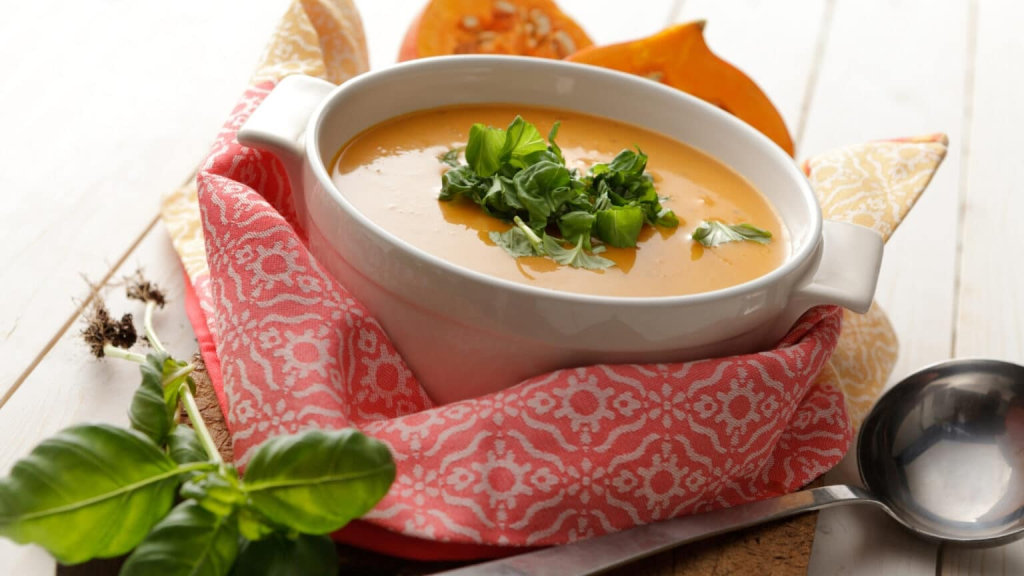
Sweet Tomato Jam is given a nice kick by the addition of ginger.

  • 2 tablespoons sunflower oil
  • 2 tablespoons grated ginger
  • 1 red onion, finely chopped
  • 1/2 cup (125ml) red wine vinegar
  • 1/2 firmly packed (100g) brown sugar
  • 1 small red chilli, finely chopped
  • 450g chopped tomatoes
  • 1 tablespoon honey

Heat the oil in a saucepan over medium-high heat. Add the ginger and onion, and cook for 2-3 minutes until the onion is soft. Add the vinegar, brown sugar and chilli, and cook, stirring, for 2-3 minutes until sugar dissolves. Stir in the tomatoes and season with salt and pepper. Bring to the boil, then reduce the heat to low and simmer, stirring occasionally, for 30-35 minutes until thick. Stir in the honey and cool to room temperature.

NB I know some of above is for more than one but now is the time to cook for more when you have so much to hand!

When the Going gets Hot . . .

Phew! It’s certainly been a hot few days. Last year, we moaned about the unseasonable cold and rain; this year, it’s no rain and too much heat! So thinking of this, apart from the usual keep in the shade, drink plenty of water etc advice, what better way to cool off than a dish of home made ice cream.

I have always loved ice-cream – not the Mr Whippy soft stuff but proper ice cream with eggs and cream and different tastes.  When my brother was little, he used to think “various ices” on a menu was a flavour and there seems to be no ending now to the “various” combinations – you can even have savoury ones for in between courses.

A few years ago, I entered a competition and won an ice cream maker but I also have a few favourites which don’t need one – you just whip it up and freeze. If you haven’t got a maker, and it’s asked for, you can get by with taking the mixture out of the freezer and mashing the ice crystals in for a few times. Keeping it easy for you, though, these are all made without a maker – so you can definitely say you made these all by yourself.

French chocolate Ice cream

  • 50g castor sugar
  • 4 tablespoons water
  • 175g plain chocolate
  • 3 egg yolks (save the whites for meringues etc – you can even freeze them!)
  • 300ml double cream

Melt the sugar and water in a pan to a syrup.  Break up the chocolate into a bowl and add the hot syrup. Mix until smooth and add the yolks.  Whip the cream until stiff and add the chocolate, folding it through until all combine. Freeze. Simples!

Lemon Ice Cream

  • large lemon, juice and zested
  • 200g castor sugar
  • 250ml milk
  • 250 ml double cream

Combine the zest and sugar.  Put the milk in a bowl and stir in the zest mixture until the sugar is dissolved.  Stir in the lemon juice.  Whip the cream until stiff and gently fold into the lemon mixture. Line a loaf tin with cling film overlapping the edges.  Pour into the tin, cover over with the edges and freeze.  Tip out and slice to serve.

Stem Ginger Ice Cream

  • 4 eggs, separated
  • 110g icing sugar
  • 3 – 4 pieces of stem ginger, finely chopped
  • 275ml double cream, stiffly whipped

Whisk the yolks and icing sugar together until pale and very thick.  Fold in the ginger and whipped cream.  Using a clean whisk, whisk the egg whites into peaks and gently fold into the mixture.  Pour into a 1.5 litre plastic container and freeze overnight.

Peach Ice Cream

  • 6 ripe peaches
  • 600ml pot double cream
  • 397g can condensed milk

Put the peaches in a heatproof bowl and pour over boiling water.  Leave for 5 minutes and peel off the skins and remove the stone.  Roughly chop them and set aside. Whisk the cream with the condensed milk until thickened slightly and falls in ribbons from the whisk.  Add the peach chunks to the cream, stirring gently.  Put into a 2 litre plastic container and freeze for 3 – 4 hours or overnight.  Take out of the freezer 20 – 30 minutes before you want it.

Variationsusing the above cream/condensed milk ratio, once whipped you can add all sorts of extras. Pulped fruit/coffee/chocolate/spice/nuts. It’s probably the easiest recipe on the whole website!

Filo Crisps – something a little different to serve with ice cream. The contrast between crisp biscuit and soft cream is really lovely! Lay a sheet of filo on a baking sheet, brush with melted butter and sift over some icing sugar.  Repeat with 2 or more layers on top, finishing with a thick layer of sugar.  Cut the filo into small squares and bake in the oven at 200oC for about 10 minutes until golden and crisp.

Sauces to serve with ice cream – sometimes a good plain vanilla ice cream is all that is wanted – and a good sauce will elevate it to ambrosia.

Hot Chocolate Sauce: Put 150g dark chocolate into a pan with 25g castor sugar and 4 tablespoons of water.  Melt together over a gentle heat then slowly increase and boil for 2 minutes.  Beat in 25g unsalted butter and serve hot.

Melba Sauce: Mash or puree 250g raspberries. Stir in 75g icing sugar and the juice of half a lemon.  The sauce can be served warm or cold.

Toffee Sauce: Put 50g butter, 50g brown sugar and 2 tablespoons golden syrup into a saucepan and heat gently, stirring, until the butter and sugar have melted.  Bring to the boil and boil hard for 3 – 5 minutes.  Cool and stir in 150ml single cream and while still hot pour over ice cream.

Summer Solstice

June 21st is the Summer Solstice and is often referred to as the first day of summer, and yet celebrations across the Northern Hemisphere at this time of year carry the name Midsummer, which is pretty confusing. Midsummer and the summer solstice are used interchangeably, but they refer to different things.

The solstice is the beginning of the astronomical summer that has been celebrated since ancient times as the longest day of the year, whereas Midsummer now refers to numerous celebrations that are held over the solstice period, between June 19 and June 24, with both pagan and Christian origins. Midsummer, as in the religious observances traditional in many countries, occurs close to the June or Summer Solstice. With celebrations originating in ancient times as a festival for the summer solstice, this could be where the name comes from. Bonfires were lit up to ward off evil spirits as the sun turned southward. If you only had the sun to measure time and dictate your hours of light, the longest day would feel like a mid-point before you make the descent back into winter.

The past few days’ weather has been glorious so instead of recipes for one, invite three friends round and follow the next few for the perfect Summer Solstice Dinner. 

Salmon Rolls with Asparagus and Butter Sauce

  • asparagus spears
  • 4 thin salmon fillets
  • juice of a lemon
  • 2 small shallots, finely chopped
  • 6 peppercorns
  • 120 ml white wine
  • 4 tablespoons double cream
  • 200g butter, cut into small cubes
  • fresh parsley

Steam the asparagus for 6 – 8 minutes till tender, refresh under cold running water.  Lay on top of the salmon fillet and roll up.  Place on a rack over a pan of boiling water, sprinkle with lemon juice, cover and steam for 3 – 4 minutes till tender.

Sauce: Put the shallot, peppercorns and wine into a small saucepan and heat gently until the wine is reduced to a tablespoonful. Strain and return to the pan.  Add the cream and bring to the boil then lower the heat.  Add the butter to the sauce in small pieces, whisking all the time.  DO NOT ALLOW TO BOIL AS IT WILL SEPARATE! Season to taste, add a little parsley and serve with the salmon roll, some new potatoes and tenderstem broccoli and/or spinach.

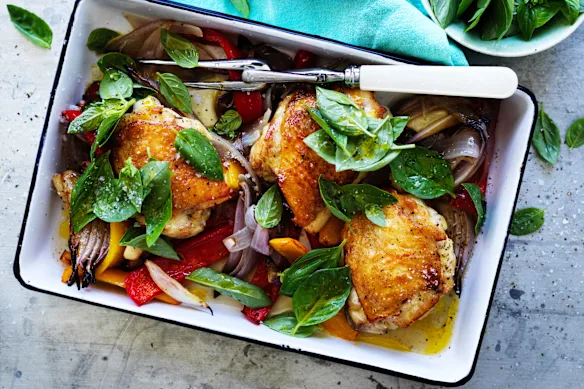
Anything with basil immediately transports me to summer and the Mediterranean – sun, warmth and taste in one little green plant!

Chicken, Pepper and Basil Traybake 

  • 2 tbsp olive oil
  • 4 chicken thigh cutlets, bone in
  • salt and pepper, to season
  • 2 red onions, peeled and cut into wedges
  • 3 – 4 cloves garlic, peeled and lightly crushed
  • red pepper, cut into thick slices
  • yellow pepper, cut into thick slices
  • 3 – 6 anchovies, chopped (optional)
  • 200ml cup chicken stock
  • a pinch of sugar
  • loosely packed basil leaves, torn
  • a splash of balsamic vinegar

Heat your oven to 200C. Take a large baking dish or frying pan that can be placed on a stovetop as well as into the oven and heat over a high heat. Add the olive oil, season the chicken thigh with salt and pepper and fry, skin side down, until golden brown. Turn the chicken and add the onions, garlic and peppers around the chicken. Scatter with the anchovies (if using) and pour over the stock. Season very well with salt, pepper and a good pinch of sugar and transfer to the oven for 30 to 35 minutes, until the chicken is just cooked though. Scatter with the torn basil leaves and serve immediately, with a splash of balsamic vinegar. A side salad  and some little Jersey potatoes would be perfect alongside.

And now for the first strawberries – what else stands for summer?

Strawberry and Mascarpone Gelato Strawberry and mascarpone is a classic mix and this is also one of the easiest ice cream recipes you could possibly make.

  • 300g strawberries, hulled and chopped
  • 2 tbsp elderflower cordial
  • 150g golden caster sugar
  • 500g mascarpone
  • 100g white chocolate, roughly chopped
  • 200g strawberries, hulled and quartered
  • 1 tbsp elderflower cordial
  • 2 tbsp golden caster sugar

Put the chopped strawberries in a bowl. Add the cordial and sprinkle over the sugar. Set aside to macerate for up to 1 hour. Beat the mascarpone and white chocolate together, then fold through the strawberry mixture. Put in a cling film-lined, straight-sided freezer-proof box (about 1 litre) and freeze. For the soft strawberries, put the berries and cordial in a bowl, then sprinkle with sugar. Set aside for 15 minutes. Slice the ice cream and spoon over the strawberries to serve.

Meteorologically, we’re nearly a month into summer. Astronomically, the summer has only just begun.

But, of course, it won’t really feel like summer in Britain until we start complaining it’s too hot!

Drinking Summer . . .

Have you been enjoying this hot, sunny weather?  I have travelled extensively but have decided that when the weather is wonderful there is nowhere more lovely than England.  The colours and smells are amazing as everything comes to life and smiles at the sun!

It’s very important, though, to remember to keep hydrated – and I don’t just mean the beer/lager you are drinking watching the football or the Pimms watching the tennis.  The elderflower is out now in full bloom but it doesn’t last too long so now is the time to make 2 lovely drinks to put in the cupboard for you to taste the sunshine when it may not be here.

Try and pick your flowers in the morning as the aroma fades with the day

Elderflower Champagne

  • 7 heads of elderflowers
  • 560 grams of sugar
  • 7 pints boiling water
  • 2 lemons
  • 2 tablespoons white wine vinegar

Put the flowers into a big bucket and add sugar, water and lemons. Give it a good stir and add the vinegar when cold.  Bottle into clean plastic bottles  (glass ones have been known to explode – and you can help save the planet using up the plastic!).  Leave for a minimum of 2 weeks to go fizzy.  Serve with lots of ice and sliced lemon

Elderflower Cordial

  • 1 kg Granulated Sugar
  • 1 litre boiling water
  • 50g citric acid (from a chemist) or juice of 2 large lemons
  • zest of 2 large lemons
  • 15 elderflower heads

Put the sugar and water in a bucket and stir to dissolve. Add the citric acid or lemon juice and zest. Add the flower heads to the sugar syrup and leave 1 -2 days, stirring regularly. Strain through some muslin into sterilised bottles and store in a cool place. To use, put a little in a glass and top with still or sparkling water.  You can even add it to your gin and tonic – and if cooking gooseberries add instead of water.

Another cordial I have made recently is LIME – fresh and sharp when diluted with sparkling water, tonic – even vodka or gin!

  • 3 Limes 
  • 355ml Hot water
  • 150g Granulated sugar
  • 3/4 Teaspoon Citric acid

Zest the three limes and set to one side. Juice the limes and set to one side.
Put the sugar in a bowl and stir in the citric acid. Put the water in a saucepan, bring it to a boil and add the sugar. Stir until the sugar is dissolved. Remove from heat. Add the lime juice and peel. Stir. Simmer for 2 minutes. Remove from heat, cover, and rest the mix until cool. This should be at least one hour. Pour into a container, seal and refrigerate overnight. Strain the mix using a fine-mesh strainer. Pour into a clean bottle and keep in the fridge.

Victory Day

It’s VE Day this week (Thursday 8 May) and up and down the country will be street parties, starting today in London, with a flyover of Buckingham Palace, and other communal events. It’s a time of celebration and coming together of communities and to give thanks for those who gave their lives so that we may have the space and freedom to love our lives, peacefully.

With the thought that somewhere, some of you may be asked to contribute to a buffet table I’m posting some ideas for sandwiches, a pudding cake and a non-alcoholic drink to wash it all down with.

There are so many breads and wraps out there, I am leaving the hard bit of what to use up to you – I’m just going to give you the fillings, a meat, fish and veggie one.

Meat and Pickled Cucumber

  • Meat of your choice – leftover roast, specially cut ham, even fish meat will do
  • ½ cucumber, thinly sliced                    
  • 2 tablespoon cider vinegar
  • 1 tablespoon olive oil
  • 1 teaspoon brown sugar
  • Mayonnaise

Combine the cucumber, vinegar, olive oil, sugar and salt and pepper in a bowl then pile up the meat, cucumber mix and mayo on top.

Smoked Salmon and Salad

  • smoked salmon, chopped
  • 2 tablespoon mayonnaise                         
  • 2 tablespoon chopped celery
  • Dill/chives/red onion to taste (one or other or all three!)
  • 1 teaspoon lemon zest (you can zest the whole lemon, squeeze the juice and freeze separately – or you can make yourself a gin and tonic!)

Combine all the ingredients in a bowl and pile up your bread with a dusting of Aleppo pepper.

Beets, Spinach and Goats Cheese

  • 1 small cooked beetroot                              1 dessertspoon olive oil
  •  good handful of spinach                            1 teaspoon red wine vinegar
  • 1 ounce goats cheese

Cook the spinach in a tiny bit of water until wilted, stir in the vinegar and cool. Layer up the sliced beetroot, spinach, cheese – and munch!

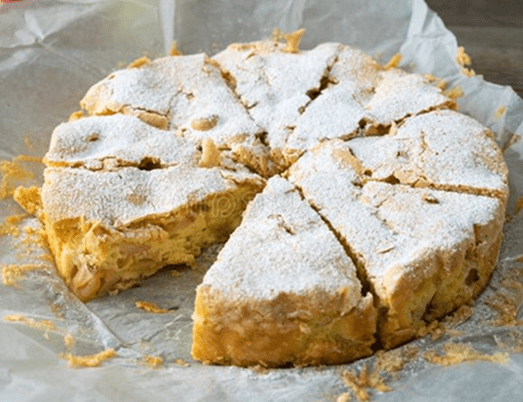
Apple Sharlotka

  • 6 large, tart apples
  • 3 large eggs
  • 200 grams granulated sugar
  • 1 teaspoon vanilla extract
  • 125 grams plain flour

Preheat oven to 350 degrees. Line the bottom of a 9-inch springform pan with parchment paper. Butter the paper and the sides of the pan. Peel, halve and core your apples, then chop them into medium-sized chunks. (I cut each half into four “strips” then sliced them fairly thinly — about 1/4-inch — in the other direction.) Pile the cut apples directly in the prepared pan. Meanwhile, in a large bowl, using an electric mixer or whisk, beat eggs with sugar until thick and ribbons form on the surface of the beaten eggs. Beat in vanilla, then stir in flour with a spoon until just combined. The batter will be very thick. Pour over apples in pan, using a spoon or spatula to spread the batter so that it covers all exposed apples. (Spread the batter and press it down into the apple pile. The top of the batter should end up level with the top of the apples.) Bake in preheated oven for 55 to 60 minutes, or until a tester comes out free of batter. Cool in pan for 10 minutes on rack, then flip out onto another rack, peel off the parchment paper, and flip it back onto a serving platter. Dust lightly with ground cinnamon and icing sugar

Rhubarb Cordial

  • 450g rhubarb, chopped
  • 225g sugar (I know it seems a lot, but remember you are going to dilute it and don’t need a lot)
  • 300ml water
  • 1 orange, zest and juice
  • 1 lemon, zest and juice

Put the sugar and water into a large saucepan.  Add the rhubarb, zests and juices and bring to the boil.  Cook until the rhubarb is completely mushy (technical term!).  Put a piece of muslin over a large bowl (I secure mine with an elastic band) and pour the liquid and fruit into it.  Leave it to drip through overnight. Bottle and keep in the fridge. I have no idea how long it will last as it seems to go as fast as I can make it, but I would think about 1 week to 10 days.

PS if you want to make more, I work on a ration of half sugar to weight of rhubarb and up the water slightly

Happy Easter!

The tradition of eating and gifting chocolate at Easter dates back centuries ago when Christian Europeans began exchanging eggs as symbols of rebirth during Lent season. This evolved into candy-filled eggs made from sugar paste or marzipan, which became popular during springtime festivals at the end of Lent on Easter Sunday. Later on, these treats were replaced by hollowed-out chicken eggs filled with sweets. It wasn’t much later that solidified cocoa butter was used to make edible “chocolate” eggs – a practice that continues today in many countries around the world.

The Victorian era saw a significant rise in the popularity of gifting chocolate at Easter. At the time, it was seen as an extravagant and luxurious chocolate treat, so gifting chocolates became a sign of status. The British chocolatier JS Fry & Sons are often credited with being the first to produce a hollow chocolate egg. To keep up with the growing demand for this new treat, they created a special machine to produce their eggs in 1873. This advanced technology allowed them to create hollow eggs at an unprecedented rate, which would soon become the most popular Easter treat in the UK.

But not all chocolate has to be made into eggs – try these recipes instead for a sweet treat throughout the year – you are worth it!

CHOCOLATE DELICE

  • 200g dark chocolate (cooking or posh) 
  • 1/pt single cream (if you only have double use that with half milk)
  • 1 egg

Break up the chocolate in a bowl.  Bring the cream to a boil and pour over.  Whizz till all melted and add the egg to blend.  Pour into individual dishes and put in fridge till ready.

Find a quiet corner with a your book, take a teaspoon and enjoy.

TIFFIN BARS

  • 100 g Butter
  • 25 g Caster Sugar
  • 3 tbsp Cocoa Powder
  • 4 tbsp Golden Syrup
  • 225 g digestive biscuits approx. 15 (or Rich Tea or Ginger snaps or any of the broken biscuits lying at the bottom of your biscuit barrel)
  • 100 g Raisins
  • 230 g Milk or Dark Chocolate

Line your tray-bake tin with greaseproof paper Set aside. Crush your biscuits. You want most of it to be quite fine but leave some bits in bigger chunks to give your Tiffin a bit of texture. Add the butter, sugar, cocoa powder, golden syrup and 30g of milk chocolate to a large bowl over a saucepan of boiling water, stirring often. Stir in the biscuits and raisins and mix well. Press the mixture into your pre-lined tin. Melt the remaining chocolate in another bowl over water, stirring often. Pour over the biscuit mixture and smooth over evenly. Leave to set in the fridge for at least 2 hours but ideally over night before cutting into individual portions. You could also add chopped marshmallows/cherries/dried apricots/maltesers – whatever takes your fancy!

FRENCH CHOCOLATE ICE CREAM

  • 2 oz caster sugar            4 tablespoons water         6 oz plain chocolate
  • 3 egg yolks (freeze the egg whites individually for later or make some meringues)
  •  1/2 pint double cream

Melt the sugar and water together till a light syrup.  Break up the chocolate into a bowl and pour the hot syrup over.  Mix to smooth and add yolks.  Whip the cream until stiff, fold in the chocolate and freeze.  Simples!